FISHING REELS
Your reel controls line management, drag, and retrieve. Understanding the differences between reel types will help you match equipment to your fishing style.
Spinning Reel
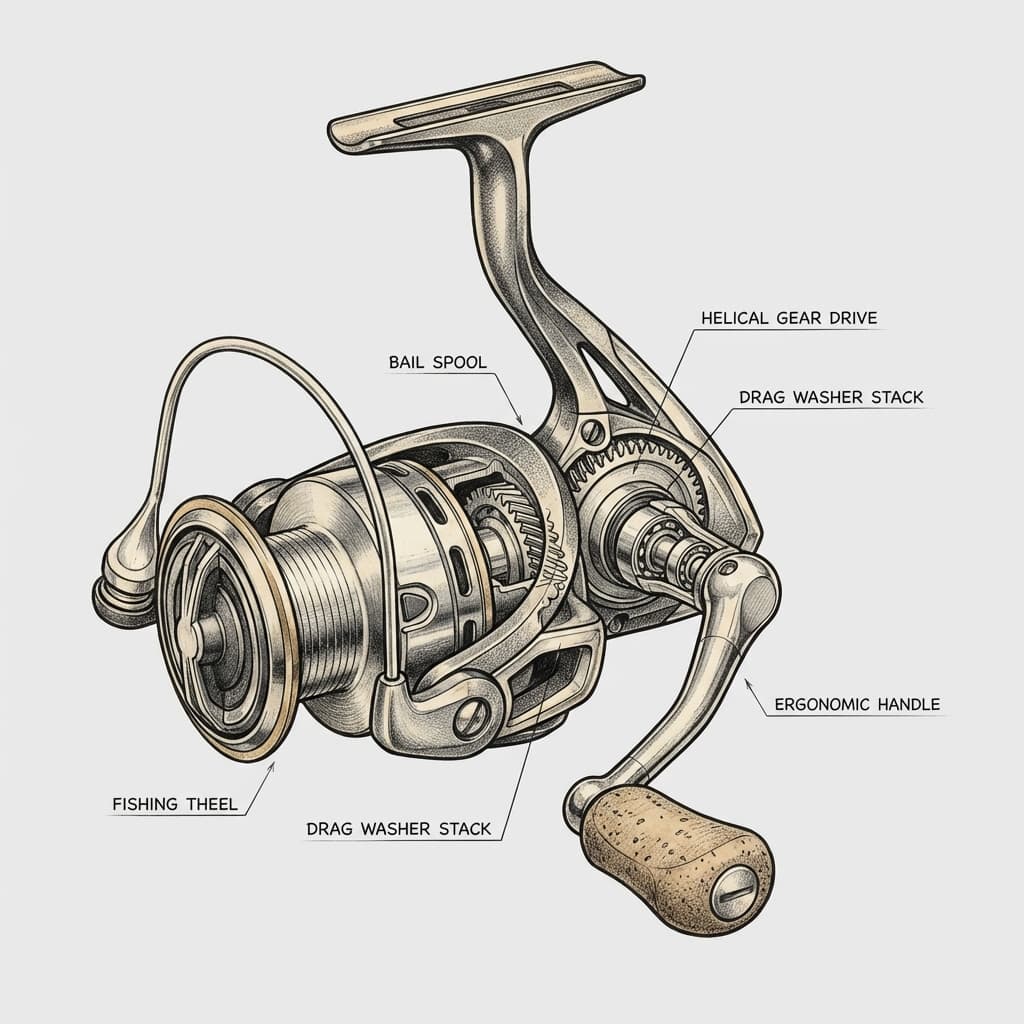
BeginnerThe most popular reel type featuring an open-face design with a fixed spool mounted below the rod. The bail wire guides line onto the spool during retrieval.
Best For
Key Features
Advantages
- Easy to learn and operate
- Rarely tangles or backlashes
- Excellent for casting light lures
- Smooth drag systems
- Left or right-hand retrieve
Limitations
- Can experience line twist
- Less precise than baitcasters
- Not ideal for very heavy applications
Pro Tips
- Fill spool to 1/8" from the rim for best casting
- Use the anti-reverse for solid hooksets
- Match reel size to rod power (1000-2500 for light, 3000-4000 for medium)
- Always close the bail by hand, not by cranking
Baitcasting Reel
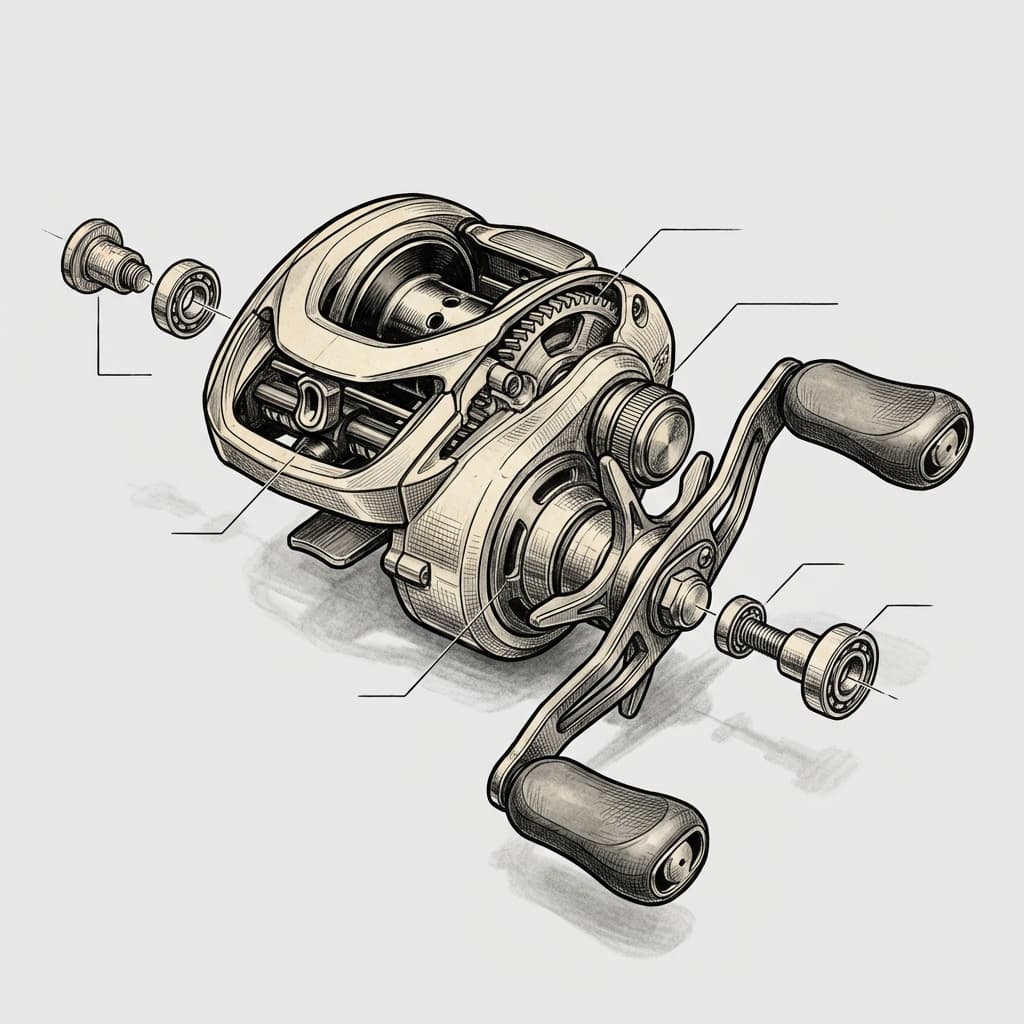
AdvancedA precision reel mounted on top of the rod with a revolving spool controlled by your thumb. Offers unmatched accuracy and power for experienced anglers.
Best For
Key Features
Advantages
- Superior casting accuracy
- Excellent power and torque
- Handles heavy lines and lures
- Faster line retrieval
- Better sensitivity
Limitations
- Steep learning curve
- Prone to backlash ("bird's nest")
- Handle position typically fixed
- More expensive
- Requires regular maintenance
Pro Tips
- Start with brakes set high, reduce as skill improves
- Educate your thumb - it's your backlash prevention
- Spool tension should let lure fall slowly with rod at 45°
- Practice casting in open areas first
Spincast Reel
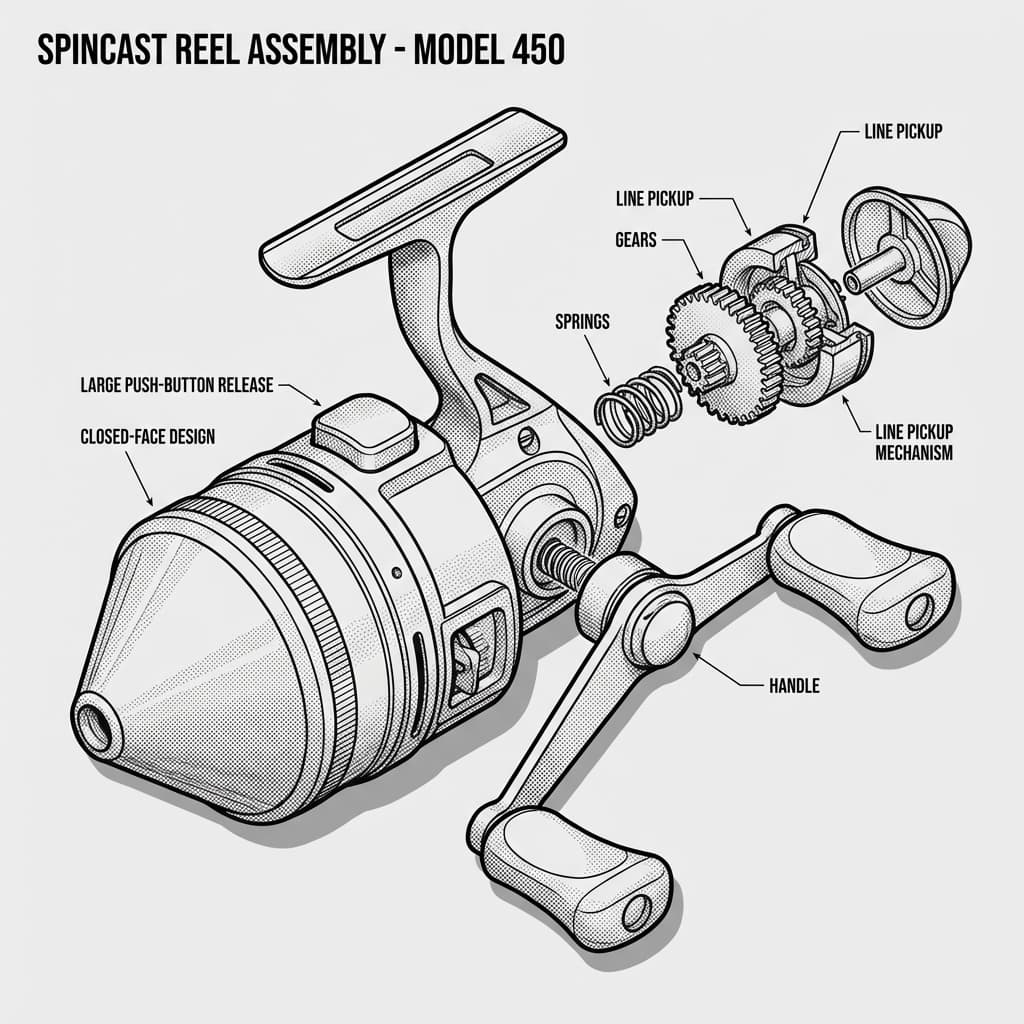
BeginnerThe simplest modern reel with a closed face design and push-button casting. All internal components are protected, making it ideal for beginners and casual anglers.
Best For
Key Features
Advantages
- Easiest reel to use
- No line tangles or backlash
- Affordable price point
- Protected internal parts
- Great for teaching kids
Limitations
- Shorter casting distance
- Less accurate casts
- Limited line capacity
- Not suitable for heavy applications
- Less sensitive than other types
Pro Tips
- Perfect for dock fishing and panfish
- Great starter reel before moving to spinning
- Keep line fresh - old line reduces performance
- Don't force it for applications it's not designed for
Fly Reel
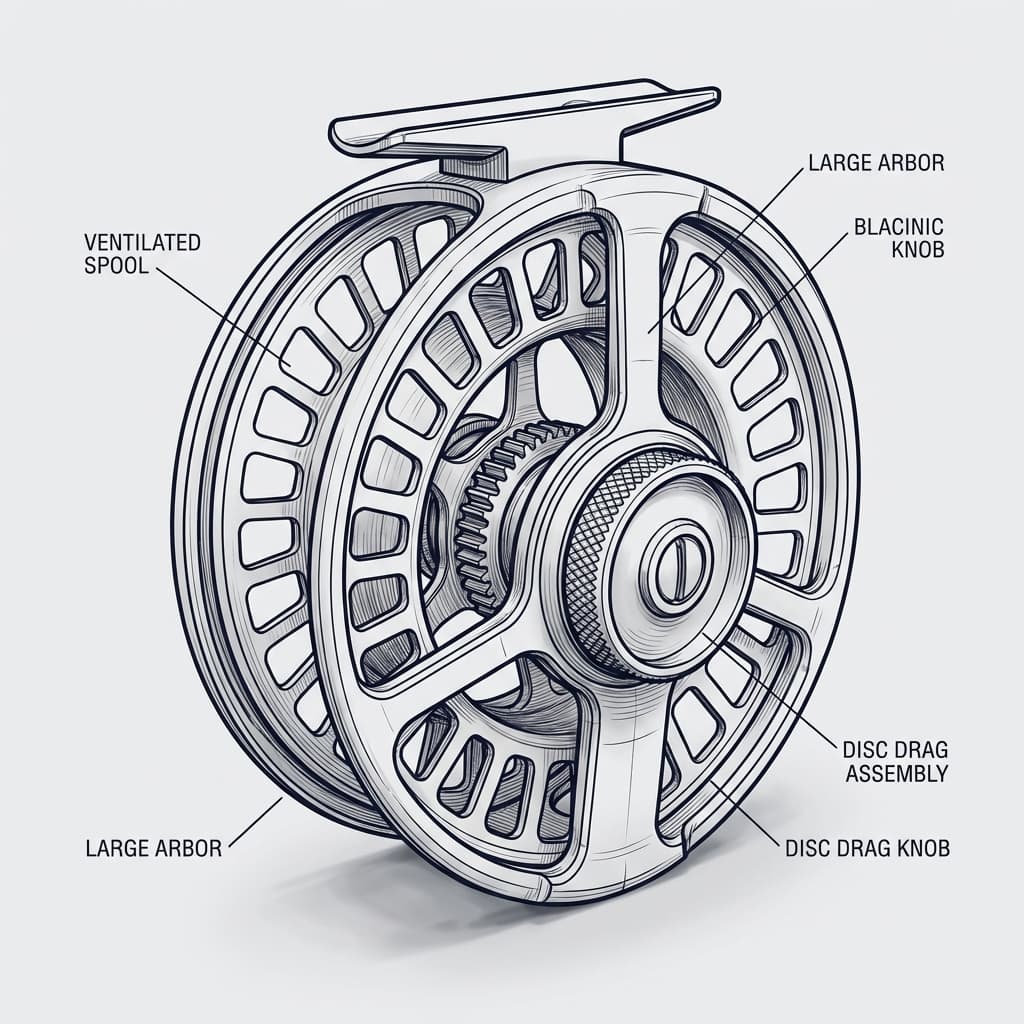
IntermediateA specialized reel designed to hold fly line and backing. Unlike other reels, fly reels primarily serve as line storage, with the drag system critical for fighting fish.
Best For
Key Features
Advantages
- Essential for fly fishing
- Smooth drag for fighting fish
- Large arbor reduces line memory
- Balances the fly rod
- Durable aluminum construction
Limitations
- Only used for fly fishing
- Doesn't aid in casting (line weight does)
- Can be expensive for quality
- Requires matching to rod weight
Pro Tips
- Match reel weight to rod weight (e.g., 5-weight reel for 5-weight rod)
- Large arbor reels retrieve line faster
- Quality drag is essential for larger fish
- Keep reel clean - rinse after saltwater use