ESSENTIAL KNOTS
A strong knot is the only connection between you and your fish. Master these essential knots and you'll never lose a fish to knot failure again.
GOLDEN RULES FOR ALL KNOTS
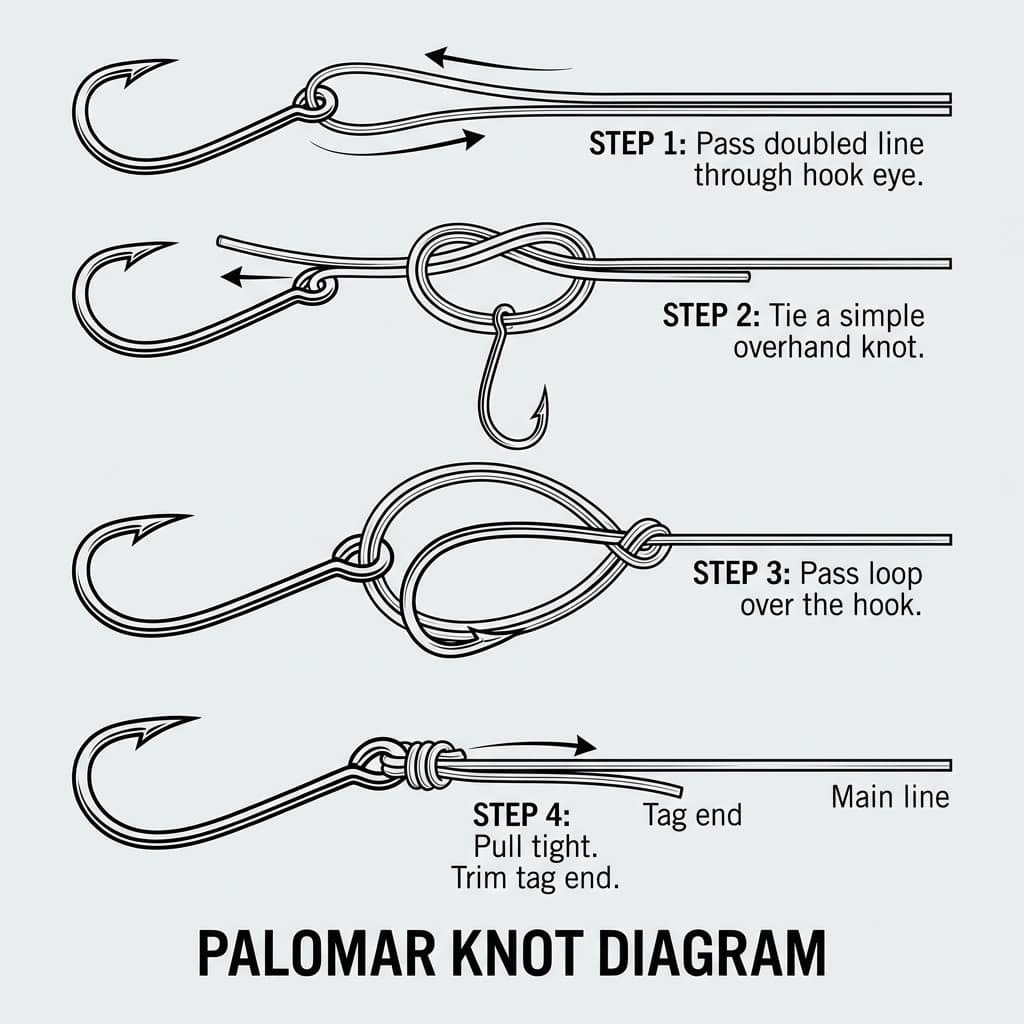
Palomar Knot
Easy95-100% line strengthOne of the strongest and most reliable fishing knots. It maintains nearly 100% of line strength and works exceptionally well with braided line.
Best For
Works With
HOW TO TIE THE PALOMAR KNOT
- Double 6 inches of line and pass the loop through the hook eye
- Tie a loose overhand knot with the doubled line (hook hangs below)
- Pass the loop over the entire hook or lure
- Moisten the knot with saliva or water
- Pull both the standing line and tag end to tighten
- Trim the tag end close to the knot
Pro Tips
- Best knot for braided line
- Ensure loop draws tight at the eye, not below it
- Can be tricky with large treble hook lures
- Always wet the knot before cinching tight
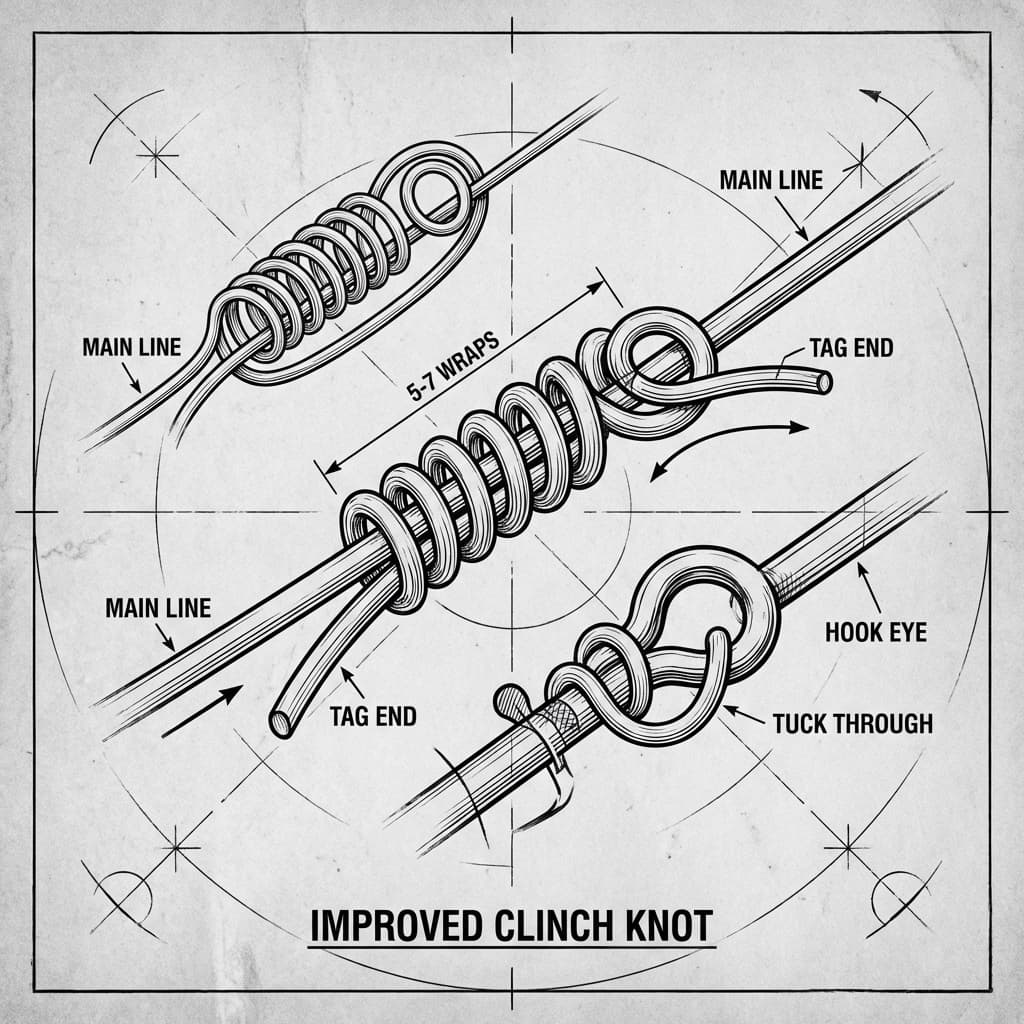
Improved Clinch Knot
Easy85-95% line strengthThe classic go-to knot for connecting monofilament or fluorocarbon to hooks and lures. Simple, quick, and reliable - the first knot many anglers learn.
Best For
Works With
HOW TO TIE THE IMPROVED CLINCH KNOT
- Pass line through the hook eye, leaving 6-10 inches of tag end
- Wrap the tag end around the main line 5-7 times
- Thread tag end through the small loop above the eye
- Pass tag end through the large loop you just created
- Moisten the knot
- Pull main line slowly to tighten - coils should stack neatly
- Trim tag end, leaving 1/16 inch
Pro Tips
- More wraps for lighter line, fewer for heavy
- The "improved" part is passing through the big loop
- Works best with mono and fluoro (not ideal for braid)
- Moisten knot to prevent friction damage
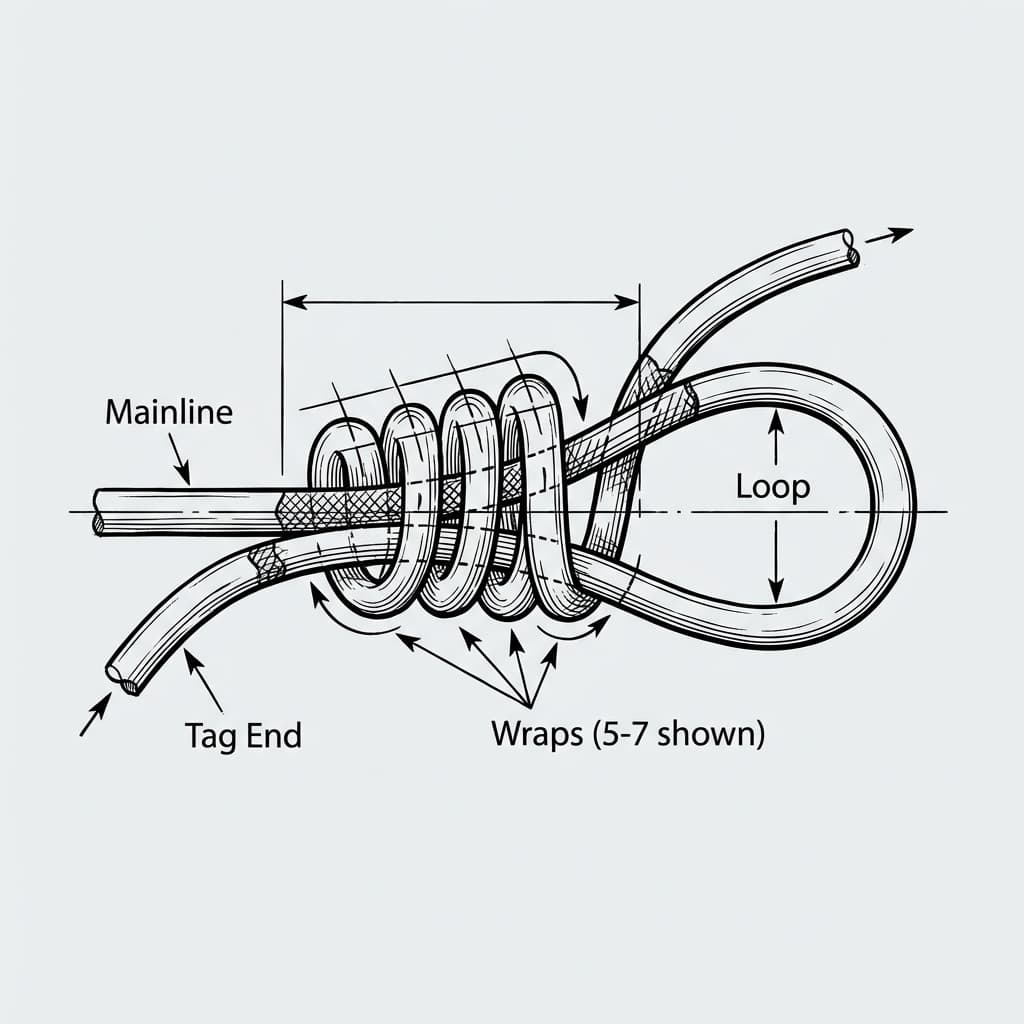
Uni Knot
Easy90-95% line strengthA versatile knot that can be used for hooks, lures, joining lines, and more. Also called the "Duncan Loop" or "Grinner Knot." Easy to learn and very strong.
Best For
Works With
HOW TO TIE THE UNI KNOT
- Pass line through the eye, then double back parallel to mainline
- Create a loop by laying tag end over the doubled line
- Wrap tag end through the loop and around both lines 5-6 times
- Moisten the knot
- Pull the tag end to snug up the wraps
- Pull the main line to slide knot down to the eye
- Trim the tag end
Pro Tips
- Use 6-8 wraps for braided line
- Double Uni can join two different line types
- Can be left as a loop knot for lure action
- Very consistent once you've practiced it
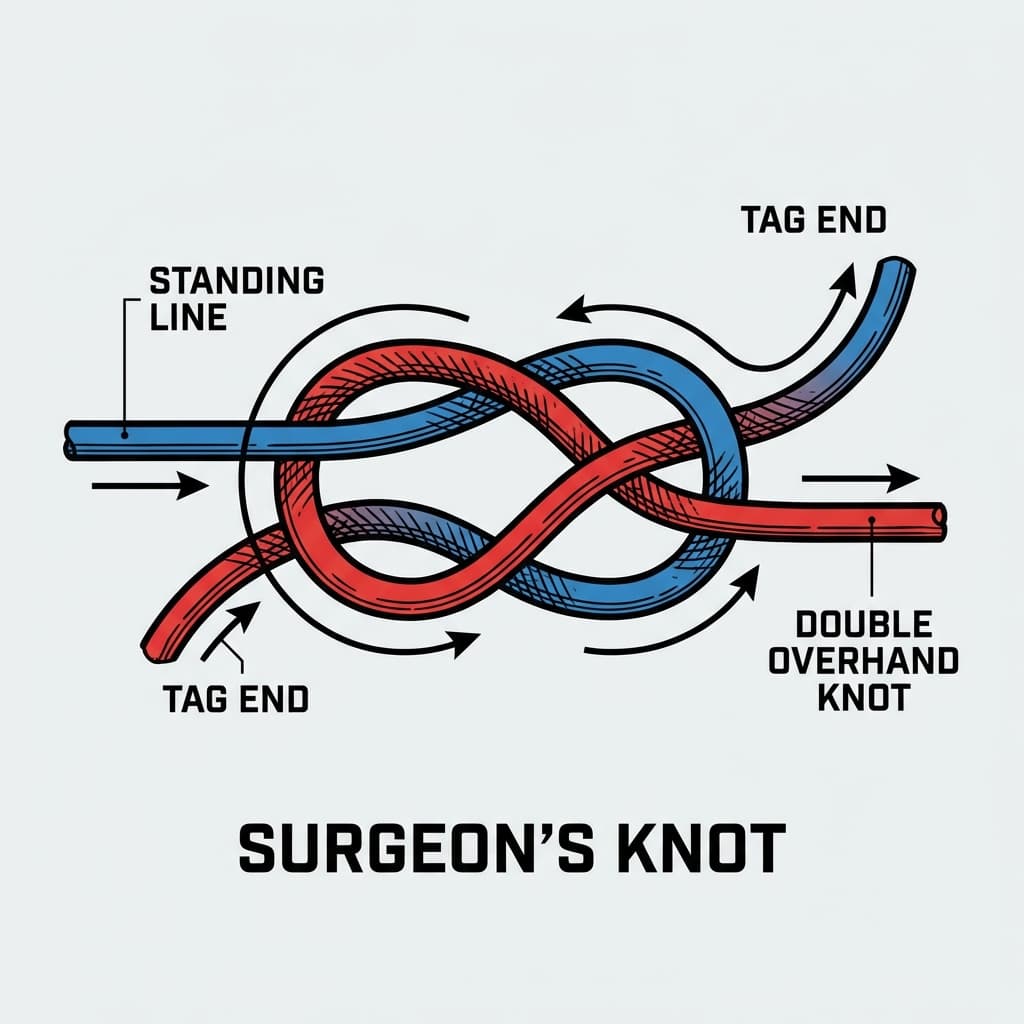
Surgeon's Knot
Easy85-90% line strengthA quick and easy knot for joining two lines together, such as attaching a leader to your mainline. Works well even when lines are different diameters.
Best For
Works With
HOW TO TIE THE SURGEON'S KNOT
- Overlap the mainline and leader by 6-8 inches
- Form a simple loop with both lines together
- Pass both tag ends through the loop twice (double overhand)
- Optionally pass through a third time for added strength
- Moisten and pull all four ends to tighten
- Trim both tag ends close to the knot
Pro Tips
- Great for fluorocarbon leaders on braided mainline
- Triple Surgeon's (3 passes) is even stronger
- Quick to tie on the water
- Tag ends will stick out at angle - normal
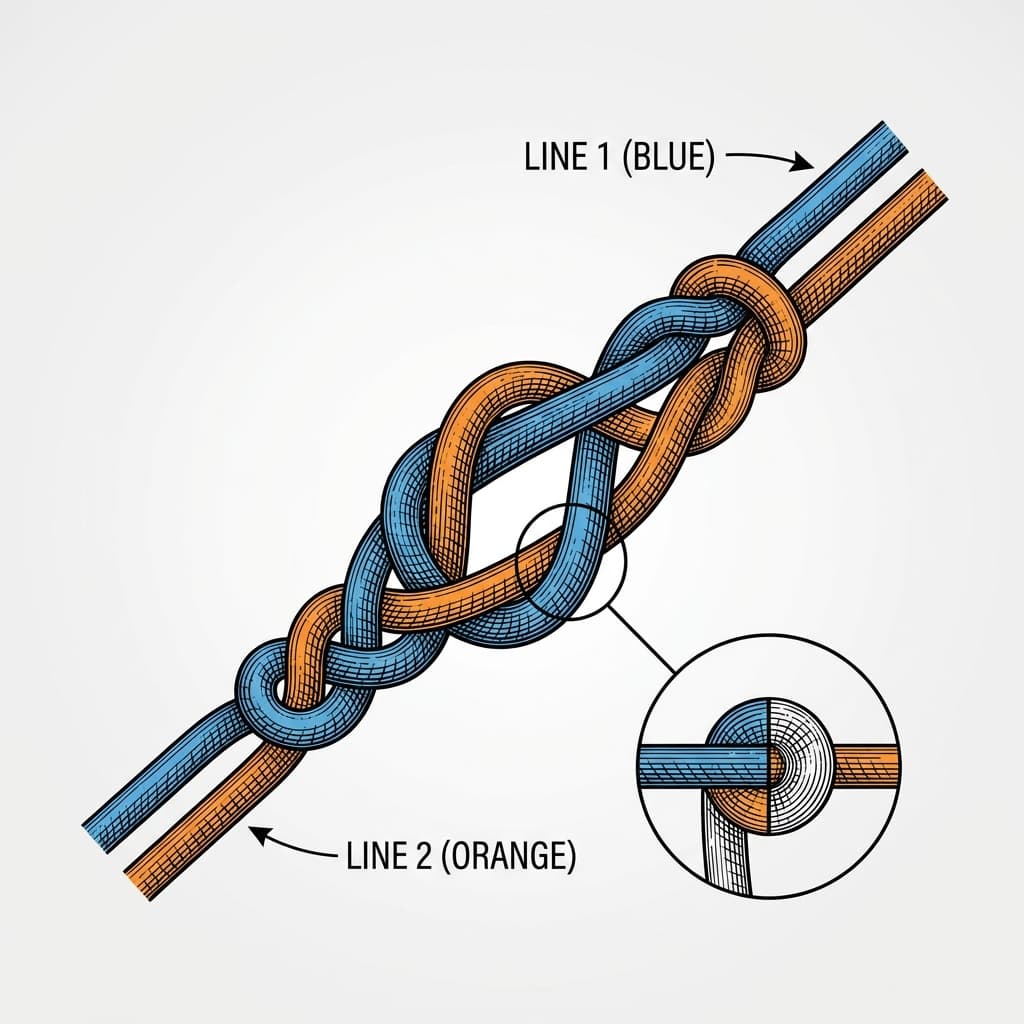
Blood Knot
Moderate85-90% line strengthThe classic knot for joining two lines of similar diameter, especially in fly fishing for building tapered leaders. Creates a slim, strong connection.
Best For
Works With
HOW TO TIE THE BLOOD KNOT
- Overlap the two line ends by 6 inches
- Wrap one tag end around the other line 5 times, then bring back through the center
- Repeat with the other tag end, wrapping in the opposite direction
- Both tag ends should exit the center in opposite directions
- Moisten and pull both standing lines to tighten
- Trim tag ends close
Pro Tips
- Lines should be similar diameter (within 0.003" for best results)
- Hold the center junction while making wraps
- Used extensively in fly fishing for leader construction
- Takes practice but creates clean, slim connection
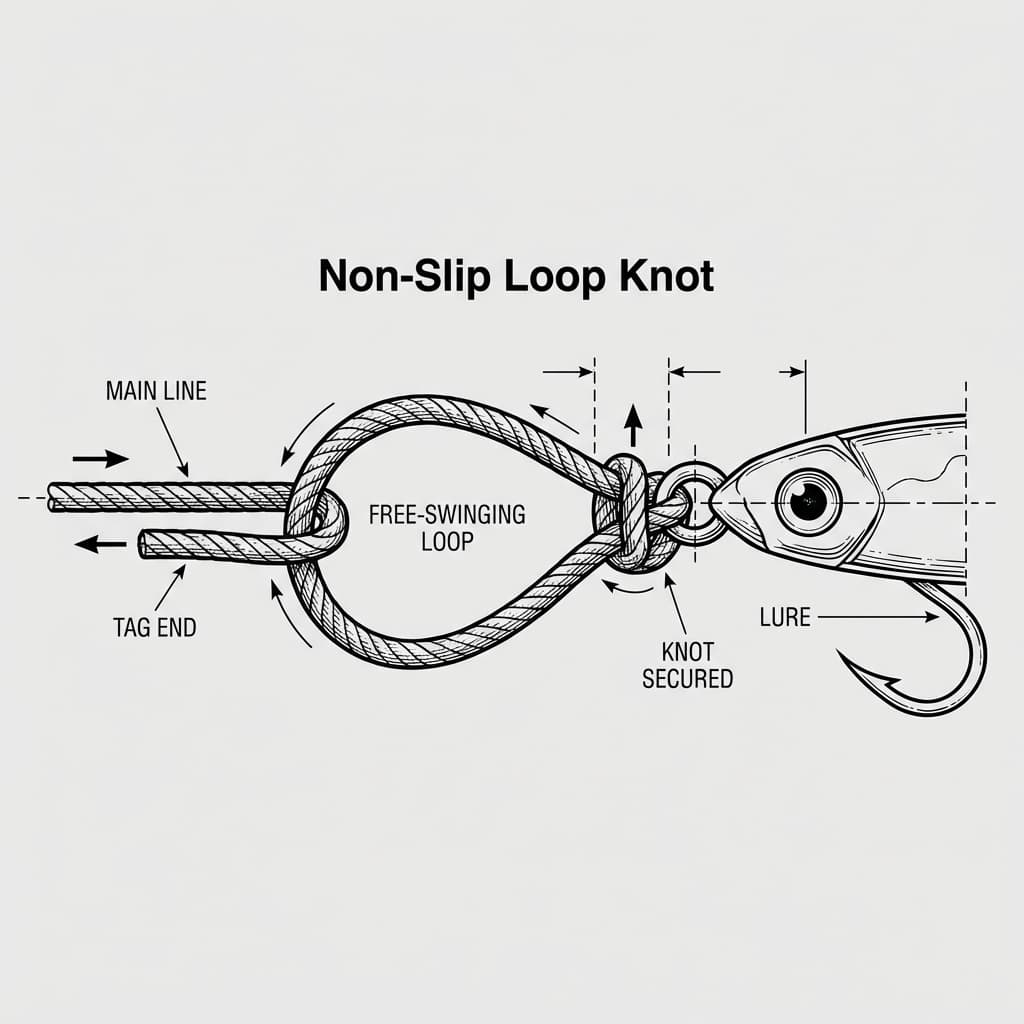
Non-Slip Loop Knot
Moderate85-95% line strengthCreates a fixed loop that allows lures and flies to move freely for more natural action. Essential for serious finesse anglers and fly fishers.
Best For
Works With
HOW TO TIE THE NON-SLIP LOOP KNOT
- Tie a loose overhand knot in the line, 10 inches from end
- Pass tag end through hook eye, then back through overhand knot
- Wrap tag end around standing line 4-5 times
- Pass tag end back through the overhand knot (same side you exited)
- Moisten and pull tag end to snug wraps
- Pull standing line to seat the knot at desired loop size
- Trim tag end
Pro Tips
- Loop size affects lure action - experiment
- Perfect for jerkbaits, crankbaits, and topwater
- Smaller loops for smaller lures
- Also known as Kreh Loop or Rapala Knot